In the network cabling and equipment deployment of German computer room, electromagnetic compatibility (EMC) and grounding processing are the core links to ensure communication stability and personnel safety. This article focuses on the perspective of safety management, combines cabling principles, shielding and grounding strategies, and detection and maintenance methods to provide practical points applicable to the German computer room environment, which can be used as a reference during operation, maintenance and project implementation.
Basic requirements for electromagnetic compatibility (EMC)
Electromagnetic compatibility requires minimizing electromagnetic interference sources and improving immunity in the computer room. Construction and operation and maintenance should follow the basic principles of local and international standards (such as IEC/EN and other relevant specifications), and evaluate interference paths, shielding requirements and filtering solutions. Prevention is better than remedy. Identifying potential EMC risks in the design stage in advance can significantly reduce later failures and expensive rectification costs.
Principles for routing network cables in computer rooms
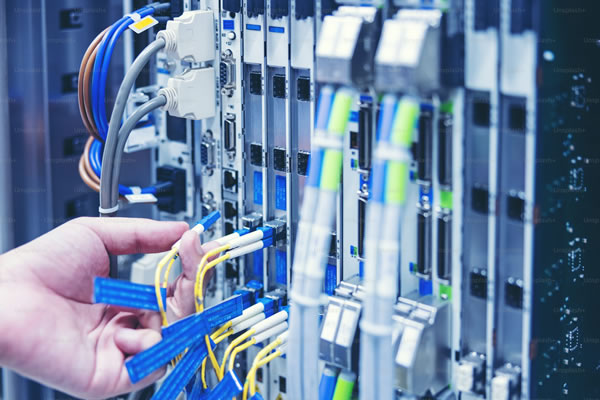
Network cable routing should follow the principles of "layering, shunting, and spacing": keep a sufficient distance between weak signal network cables and strong and high-current equipment; use independent cable troughs or bridges to separate different types of cables; try to keep the routing paths neat and avoid crossing and over-tightening to reduce the possibility of induction and crosstalk and improve overall network stability.
Key points for selecting shielded and unshielded cables
Select shielded (STP/FTP) or unshielded (UTP) cables based on the computer room environment and interference source density. In areas with high noise or close-range strong current equipment, shielded cables are preferred and the shielding layer is ensured to be well grounded; in low-interference environments, lower-cost unshielded solutions can be considered, but cable quality and standard installation must still be ensured to avoid the adverse effects of incomplete shielding.
Cabling and Equipment Grounding Strategies
The grounding strategy should form a unified equipotential reference: all cabinets, wire ducts, shielding layers and metal components should be connected to the room grounding grid through short and thick grounding conductors. To avoid ground loop interference caused by multi-point grounding, use single-point or controlled equipotential connection methods, and set equipotential copper bars or grounding busbars according to the actual structure to ensure that the grounding resistance meets safety and functional requirements.
Note on separation and bridging of power and signal lines
Power lines and signal lines should be laid out strictly separately. If they must cross, try to cross them at right angles to reduce coupling. For scenarios where cables must be run in parallel, add shielding or use metal partitions for isolation. Be careful not to randomly connect the shielding layer of the signal line to different grounding points to prevent ground loops; the grounding of the bridge must be continuous and reliable, and the interface must be fixed with a qualified grounding clamp.
EMC treatment of wall and pipe penetrations
Through walls or pipes are weak points in EMC and grounding. Metal pipes, shielding sleeves or EMC sealing materials should be used to maintain shielding continuity. The wall bushing and the grounding body must be reliably connected to avoid the formation of discontinuous shielding gaps. For fire protection and fire separation, take into account the fire protection and EMC requirements, and use products and construction methods that both meet the fire protection grade and retain the shielding function.
Grounding system inspection and maintenance specifications
Establish a regular grounding and shielding testing system, including periodic inspections of grounding resistance, grounding conductor integrity, shielding continuity and equipotential bonding status. The test results should be recorded and archived and associated with the maintenance plan. When abnormalities occur, respond quickly according to priority, and troubleshoot common problems such as ground point corrosion, looseness, or poor connections to ensure long-term stable operation.
FAQs and troubleshooting procedures
Common faults include signal packet loss, interference noise, clock drift, etc. The investigation should start with the identification of electromagnetic sources and locate them layer by layer in the order of "External -> Lines -> Equipment -> Grounding". Use tools such as spectrum analyzers, ground resistance testers, and signal quality testers, combined with on-site inspection records, to gradually eliminate and formulate rectification suggestions to avoid temporary and repetitive recovery measures.
Conclusions and suggestions
In the safety management of network cable routing in German computer rooms, electromagnetic compatibility and grounding processing are both technical and management issues. It is recommended to include EMC assessment and grounding strategies in the design stage, clarify construction and acceptance standards, and establish a regular detection and fault response mechanism. Through standardized wiring, reasonable selection and strict grounding management, the operational reliability and safety of the computer room can be significantly improved.
- Latest articles
- Operation And Maintenance Exchange American Cloud Server Bar Common Troubleshooting And Response Experience
- Migration Case Analysis: How To Smoothly Switch To Singapore Cn2 Cloud Server And Ensure That Business Is Not Dropped
- A Beginner's Guide Teaches You How To Identify The Service Quality And Potential Risks Of Cheap Hong Kong Site Groups
- How SEO Webmasters Use Vietnam Cn2 To Improve Search Rankings In The Vietnamese Market
- Comparing The Cost-effectiveness And User Experience Of Triple-network Cn2 Malaysia With Single-network Access
- How Can Enterprises Incorporate Free Unlimited Traffic Hong Kong Cn2 Into Disaster Recovery And Capacity Expansion Plans?
- Taiwan Server Rental Common Contract Terms And Service Level Agreement Description
- Safety Management: Key Points In Handling Electromagnetic Compatibility And Grounding During Network Cable Routing In German Computer Rooms
- The Impact Of Using Cambodian DNS Server Address On Cross-border Website Optimization On Access Speed
- Comparison Report On The Compatibility And Performance Of The Latest Version Of Tencent Hong Kong Cloud Server V2ray
- Popular tags
-
Research On Deutsche Telekom Data Center Line Routing Safety Standards And Cross-Regional Connectivity Schemes
This paper studies the safety specifications and cross-region connectivity schemes for Deutsche Telekom's data center lines, covering practical recommendations such as regulatory requirements, physical routing, EMC and fire protection, redundancy design, and fiber optic transmission. -
A Must-read List And Process For German Volkswagen Server Maintenance Inspections For Newbies To Operation And Maintenance
the german volkswagen server maintenance inspection checklist and process for novice operation and maintenance covers key steps such as preliminary preparation, hardware and environment inspection, system and network verification, backup and security, logs and alarms, helping to standardize daily operation and maintenance work. -

How To Choose A Stable And Efficient German Server Hosting Service Provider For Your E-commerce Platform
german server hosting selection guide for e-commerce platforms, covering performance, network, availability, security compliance, scalability and technical support to help select a stable and efficient hosting service provider.